
DeGeorge Development is a commercial contractor in NJ that started out commercial. The company opened in 1982 as a strictly commercial builder and added residential work later, which is the reverse of the usual path.
We build offices, retail plazas, banks, restaurants, hotels, medical facilities, churches and industrial buildings across Central and Southern New Jersey, working out of 249 Brick Blvd. in Brick. Planning, permitting, construction and final walkthroughs run through one company, with architects, engineers, project managers and skilled craftsmen on the team.
Call 732-477-6363 to talk about a project.
Commercial Buildings We’ve Put Up in New Jersey
Ten bank branches, five retail plazas, four medical facilities and a church is the short version of our commercial portfolio. The longer version, by sector:
Banks. Investors Savings Bank branches in Whiting, Toms River, Jackson, Brick and Lakewood. Sovereign Bank in Toms River. Shore Community Bank in Jackson and Toms River. Kearny Federal Bank in Forked River and Toms River.
Retail plazas and shopping centers. Drum Point Plaza in Brick, Ocean National Plaza in Toms River, Ramtown Plaza in Howell, Anchorage Square in Toms River, The Shoppes At Hooper in Toms River, and General Stores in Brick.
Medical. A medical building in Lakewood, a renal care facility in Whiting, Seaview Dental in Manahawkin, and the Silverton First Aid Building in Toms River.
Religious facilities. The Presbyterian Church in Forked River.
Food and beverage. Spire Coffee Shop at The Shoppes at Hooper in Toms River, a fit-out inside a plaza we built.
FREE ESTIMATE
We respond to all inquiries as quickly as possible.
Accessibility work. ADA ramp construction in Toms River.
We also built the DeGeorge Professional Building. Photos of all of it sit in the completed commercial projects gallery.
Bank branches are a useful thing to have built ten of. They arrive with corporate standards to match, a security scope, and an opening date already on somebody’s calendar.
What We Do for Developers, Property Owners and Tenants
Our commercial work splits into ground-up construction, tenant improvements and renovation or repositioning of an existing building.
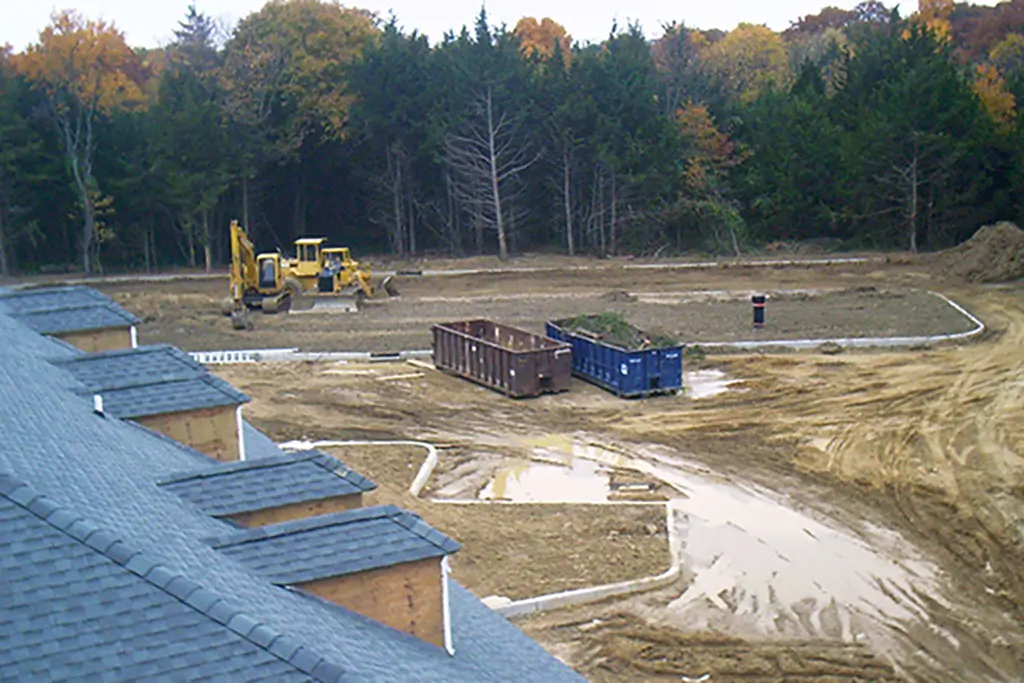
Ground-up means we take a site and put a building on it, which starts long before the foundation (see site plan approval, below). Tenant improvements and fit-outs are the interior build for a specific tenant, often inside an occupied plaza where the neighbors stay open through the work. Renovation covers a building that needs to work differently than it does now.
Construction management and design-build both run through the same team here. Whichever it is, the services run end to end: planning and permitting, conceptualization, design, construction and post-construction maintenance. Our team includes architects, engineers, project managers and skilled craftsmen, and we plan the job around your stated objectives, budget constraints and timeline.
Building types we handle: office buildings, retail, restaurants and hotels, medical facilities, banks, churches and religious facilities, plazas and shopping centers, industrial buildings including warehouses and manufacturing plants, and custom commercial projects.
Commercial Contractor For All Your Commercial Building Needs In NJ
Site Plan Approval: The Timeline Most Commercial Budgets Miss
Construction permits are the easy part of commercial approvals. Site plan approval is the one that sets your real start date, and New Jersey’s Municipal Land Use Law puts clocks on it.
- Minor site plan: the planning board grants or denies within 45 days of a complete application. Failure to act within that period counts as approval.
- Preliminary major site plan, 10 acres or fewer: 45 days.
- Preliminary major site plan, more than 10 acres: 95 days.
- Missing those deadlines is also deemed approval, though nobody plans a project hoping for that.
After the land use board comes the construction permit, and there the township has 20 business days to approve or deny a complete application, with 7 business days on a resubmission. Then inspections, then the certificate of occupancy before anybody occupies the building.
Add it up and the approval path on a ground-up commercial job runs months before a shovel moves. That’s the part of the schedule owners tend to discover late, and it’s why our first conversation is about approvals rather than finishes.
Before You Buy the Lot
A vacant commercial lot can carry problems that cost more than the land, and most of them are findable before closing.
What to check: whether the base zoning allows your specific use by right, and what the setbacks, height limits and parking criteria do to the site. Whether the title is clear of liens, easements and restrictions that block construction. A Phase I Environmental Site Assessment reviews the parcel’s history for contamination risk, and a Phase II does actual soil and water testing when the first one raises something.
Then the physical questions. A boundary and topographic survey maps the property lines, slopes and elevations. Soil testing tells you whether the ground supports your foundation or needs expensive engineering. Water, sewer, electric and gas either reach the lot or have to be brought to it, and a utility extension is a major hidden cost. Legal road access matters: a landlocked parcel is a serious problem. Clearing, grading and drainage all need estimating.
A use that isn’t permitted by right means a variance or a rezoning, and that is a lengthy process. Our full guide covers it: buying a vacant lot for commercial construction in NJ.
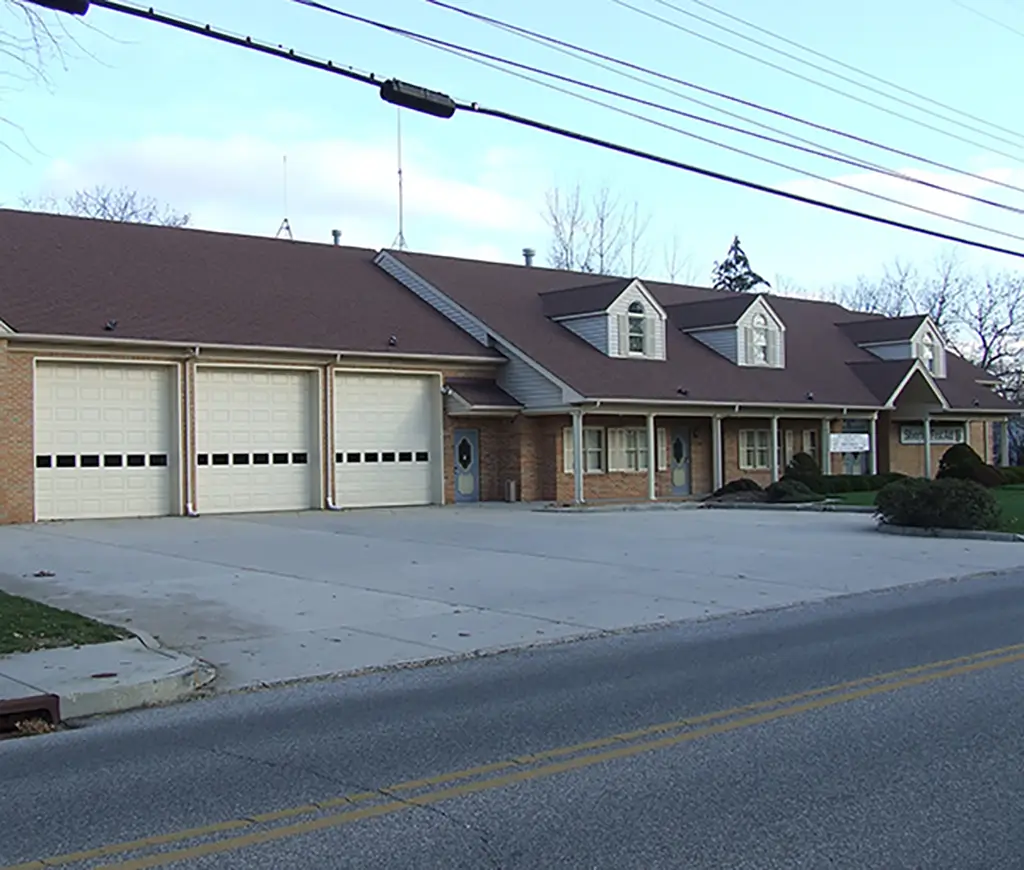
Silverton First Aid Building, Toms River NJ
Public and Institutional Projects
Public work in New Jersey runs on a separate registration, and it’s checked before bids are opened. Under the Public Works Contractor Registration Act, all contractors, subcontractors and lower-tier subcontractors who bid on or perform public work in New Jersey must register with the Department of Labor and Workforce Development. That includes subs named in the bid proposal. A first violation for working or bidding unregistered carries a penalty up to $2,500, and the certificate has to stay current to work on prevailing wage projects.
We’ve built for institutional clients, including the Silverton First Aid Building in Toms River and the Presbyterian Church in Forked River.
Tenant Improvements in an Occupied Building
A fit-out inside a live plaza is a logistics job as much as a construction job. Trash pickup, deliveries, parking for the trades, noise during business hours, and keeping the neighbors’ customers walking past an active work area.
Two code points matter on interior commercial work. Alterations get a certificate of approval from the construction official before the space is reoccupied. And if the space is changing use, say retail becoming a restaurant, New Jersey treats a change of use as its own project category with its own requirements, which usually means a new certificate of occupancy.
Accessibility comes up on this work more than owners expect. New Jersey’s accessibility requirements sit in Chapter 11 of the building subcode, and they apply to commercial alterations, not only to new buildings. We’ve done the work at the blunt end of that, including ADA ramp construction in Toms River.
Our Spire Coffee Shop fit-out at The Shoppes at Hooper went into a plaza we’d built ourselves, which is a nice position to be in: we knew what was behind the walls.
Budgeting, Scheduling and Communication
We plan around your objectives, your budget constraints and your timeline, and we talk to you throughout rather than at milestones.
The parts of a commercial estimate that move most: the approval path and how long it runs, site work and utilities, the building type and its systems, whether the space is occupied during construction, accessibility upgrades triggered by the work, and anything the site investigation turns up late.
Changes get written up before they happen, with the scope and cost documented and approved. On the commercial side, that paperwork discipline is not optional and never has been.
We don’t publish commercial prices, because a bank branch, a dental office and a warehouse share almost nothing except a building permit.
Commercial Construction Across Ocean and Monmouth County
As a commercial construction company in NJ, our work sits mostly in Toms River, Brick, Jackson, Lakewood, Whiting, Howell, Forked River and Manahawkin, with projects across Central and Southern New Jersey.
That map is not marketing. It’s the list of towns where we’ve already been through the planning board, the construction office and the inspection schedule, which tends to matter more on a commercial job than on a house.
For residential work, our general contractor in NJ page covers the rest of what the same office handles, including new home construction in NJ.
Commercial Contractor NJ FAQs
Start a Commercial Project
Comparing commercial contractors in NJ? Ask each one which towns they’ve already been through approvals in. Then tell us what you’re building and where it stands: a lot under contract, a lease signed, a building that needs to do something different. We’ll walk the approvals, the site questions and the schedule before anyone talks finishes.
Call 732-477-6363 or contact DeGeorge Development. Office: 249 Brick Blvd., Brick, NJ 08723.