
DeGeorge Development is a licensed and insured roofing contractor in NJ handling roof installation, roof replacement, repairs, inspections and storm damage work for homes in Ocean County and Monmouth County. Roofing sits alongside the rest of our residential work, run out of the same Brick office we’ve worked from since 1982.
Roof estimates are free. Call 732-477-6363.
Roofing Services We Handle
Our residential roofing services cover installation, renovation, replacement, routine inspections, leak repair and storm damage restoration. We’ve been a roofing company in NJ for as long as we’ve been building houses here.
New installation goes on new construction and additions. Renovation covers a roof that needs work rather than replacing. Replacement is the full job: old covering off, deck checked, new roof on.
Two materials cover most of what homeowners choose. Asphalt shingles typically hold their integrity for 20 to 25 years. A metal roof can last half a century or more, which changes the math if you plan to stay in the house.
Inspections and leak repair are the quiet half of roofing. A flashing detail caught in spring is a repair. The same detail found in December, after water has run down a rafter all autumn, is a bigger job.
Do You Need a Permit to Replace a Roof in New Jersey?
Usually not, on a detached one- or two-family house. New Jersey lists “the repair or replacement of existing roof covering on detached one- and two-family dwellings” as ordinary maintenance, which means no construction permit for a straight reroof.
FREE ESTIMATE
We respond to all inquiries as quickly as possible.
That exemption is narrower than it sounds, and these situations fall outside it:
- Roof sheathing or decking replacement. The ordinary maintenance list covers the covering, not the structure under it.
- Structural changes, like new rafters or a changed pitch.
- Attached homes. The exemption names detached one- and two-family dwellings, so townhouses and other attached housing sit outside it.
- Solar panel work, which brings electrical permitting with it.
Rotten decking is the one that catches people. You can’t always see it until the old covering comes off, which is why a straight reroof can turn into permitted work mid-job. When that happens, we file the application and the licensed trades sign their sections, the same way we do on every other job. Our general contractor in NJ page covers how we handle permits across services.
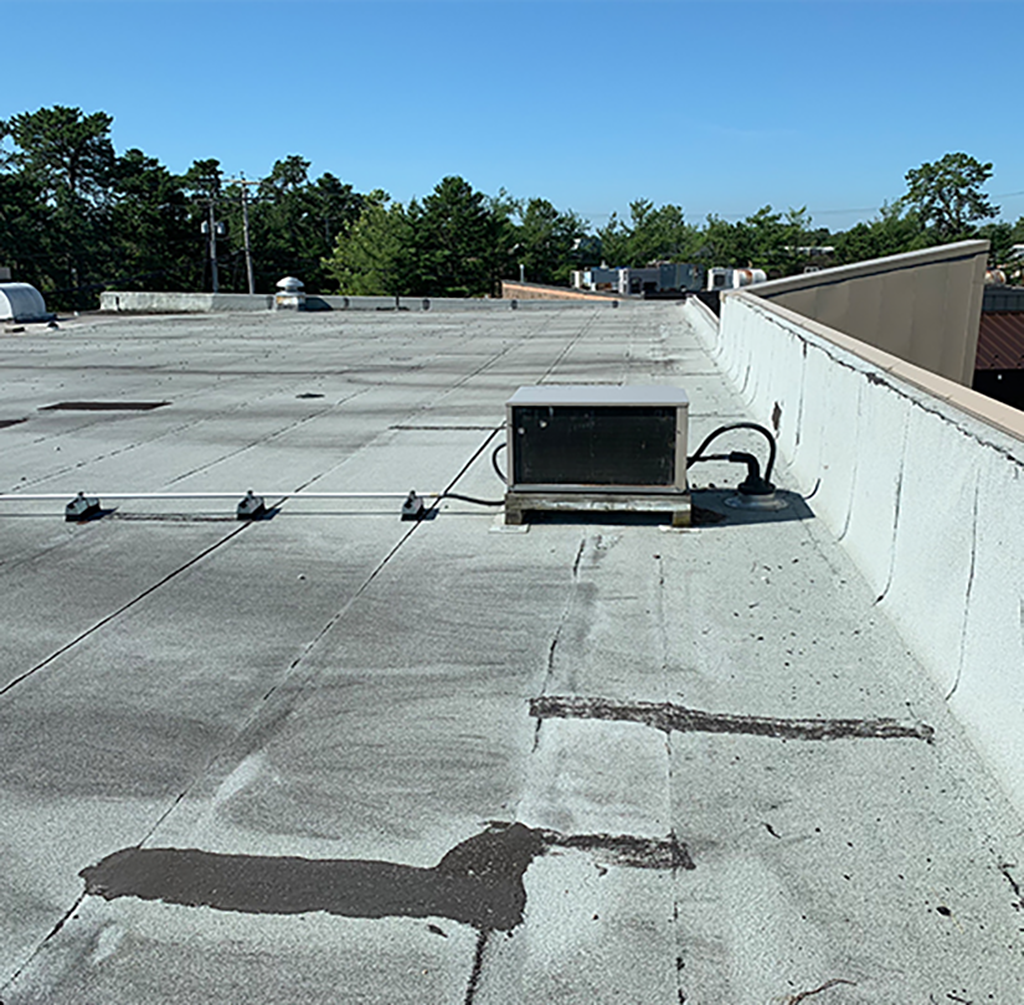
Roofing renovation NJ
Roof Replacement or Roof Repair?
Age and the extent of the damage decide it. A roof with 20-plus years on asphalt shingles and damage across several slopes is a replacement. Damage in one area on a roof with life left in it is a repair.
Four things we weigh at the inspection:
How far the deterioration has gone. Curling, cracking and missing granules across a whole slope point to a roof at the end of its run, not a patch.
The roof’s age against its material. Asphalt at 20 to 25 years, metal at 50 or more.
How much of the roof is affected. Isolated damage is repairable. Widespread damage means the next call is coming anyway.
Energy efficiency and appearance. A replacement is the moment to change material or color, and to sort out ventilation while the deck is open.
We give you the honest version of this at the inspection, including when the answer is “repair it and get a few more years.”
Coastal Roofing on the Jersey Shore
A roof two blocks from the bay faces wind loads an inland roof doesn’t, and the installation details change with it.
Fastening is the main difference. In New Jersey’s high-wind coastal zones, where design wind speeds run from around 110 to 130 mph, asphalt shingles get a 6-nail pattern rather than the 4 nails used on a standard slope.
Two other code points shape a shore reroof:
Ice barrier. New Jersey’s climate zone requires a self-adhering polymer-modified bitumen membrane at the eaves, extending at least 24 inches past the interior wall line, plus protection in valleys and around chimneys, plumbing penetrations, skylights and roof-to-wall intersections.
Layer limits. Two layers of asphalt shingles are the maximum on a residential roof. Already at two? The next roof is a full tear-off to the deck. Switching materials also means a tear-off, no matter how many layers are up there.
Salt air, driven rain and winter freeze-thaw all work on the same weak points: flashing, valleys and penetrations. Those are the places we look first on a coastal inspection.
Storm Damage and Insurance Claims: What a Roofer Can’t Legally Do
After a storm, plenty of roofers offer to “handle your insurance claim.” In New Jersey, negotiating or adjusting your claim is not something a roofing contractor may legally do.
Under the state’s Public Adjusters’ Licensing Act, no person or company may act as an adjuster without a state license. Three groups can negotiate and adjust a storm claim on your behalf: licensed public insurance adjusters, attorneys, and licensed insurance brokers and producers. A roofing contractor is none of those.
What we do instead: inspect the roof, document the damage, write the scope of repair or replacement, and give you paperwork your adjuster can work from. What we don’t do is sit between you and your insurer, or promise a settlement figure. If somebody knocking on your door after a storm offers that, or offers to make your deductible disappear, treat it as the warning it is.
Roof Inspections and Leak Repair
A roof inspection looks hardest at the places water gets in, not at the middle of the shingle field.
Flashing at walls and chimneys, valleys, plumbing vents, skylights and the eave line: that’s where leaks start. Inside, water shows up on ceilings and in the attic, often several feet from where it actually entered.
Routine inspections are how a small detail stays small. A check after a bad storm season costs less than a repair after a ceiling stain appears.
Emergency Roof Repair
Emergency roof repair runs in two stages: temporary protection first, permanent repair once the weather and the materials allow. A tarp over an open section stops the water getting into the ceiling while the real repair gets scheduled.
Call 732-477-6363 to report a leak. We’ll tell you when we can be there rather than promise a window we can’t hold.
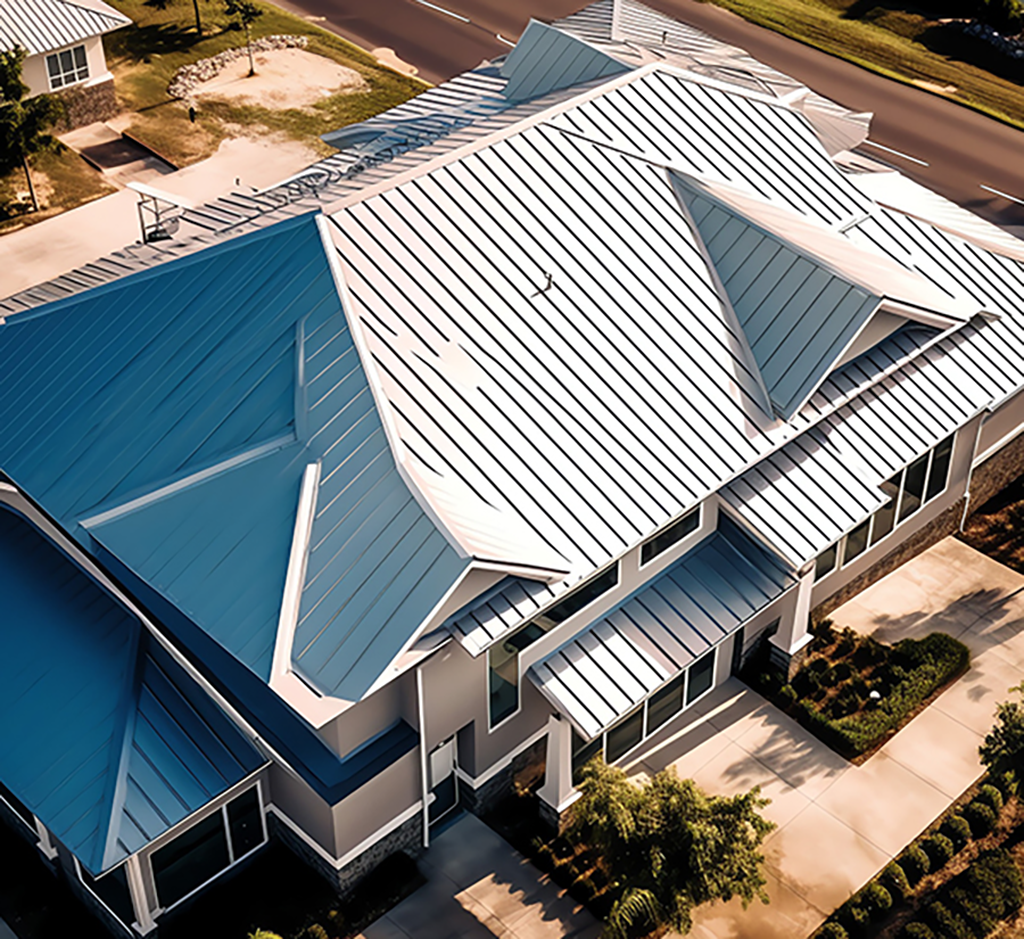
New metal roof installation NJ
What Drives a Roof Replacement Estimate
We don’t post roofing prices. The number depends on the roof, and these are the parts that move it:
- Size and pitch, since a steep roof takes longer and needs more safety setup
- Layers to remove, one or two, and the disposal that comes with them
- Deck condition once the old covering is off
- Material, asphalt shingle or metal
- Penetrations and flashing: chimneys, skylights, vents and valleys
- Wind zone, which sets the fastening pattern
- Access around the house for equipment and dumpsters
Your free estimate puts all of it in writing before work starts.
DeGeorge Development is licensed, insured and bonded.
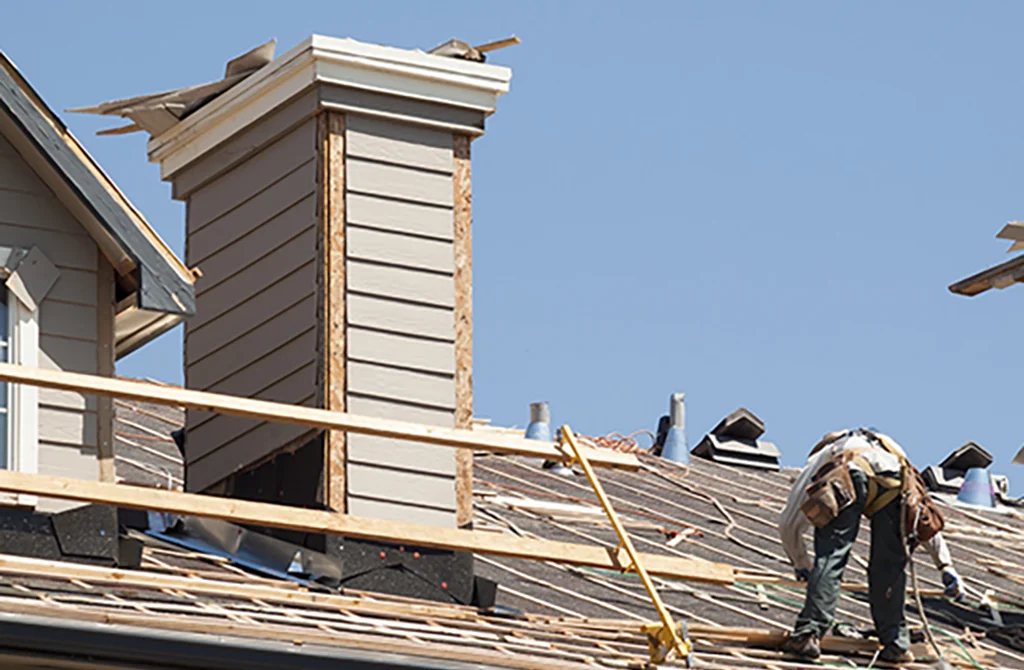
Roofing repair NJ
Roofing Across Ocean and Monmouth County
We roof houses throughout Ocean and Monmouth County from our office at 249 Brick Blvd. in Brick, on the Toms River border.
Roofing is one piece of what we do. The same office handles home renovations in NJ, home additions in NJ and new home construction in NJ, which matters when a roof problem turns out to be a framing problem, or when a house being raised needs roof work while our crew is already on the property. Our house lifting and raising in NJ page covers that side.
Roofing NJ FAQs
Book a Free Roof Estimate
Tell us what you’re seeing: a stain on the ceiling, missing shingles after a storm, or a roof you know is near the end. We’ll get up there, look at the flashing and the deck, and put the options in writing.
Call 732-477-6363 or contact DeGeorge Development. Office: 249 Brick Blvd., Brick, NJ 08723.