
A commercial construction permit is an official approval issued by a local municipality that authorizes the construction, renovation, or modification of a commercial building. The permit ensures that the project complies with local building codes, zoning laws, and safety regulations.
The 8 main steps included in the commercial construction permitting process are project code determination, zoning approval, application submission, application review, comment review, permit issuance, inspection during construction, and final inspection. The main requirements for commercial construction building permits are completed application forms (e.g., UCC-F100), Project plans (architectural, engineering), Site plan or survey, and zoning approvals (if applicable)
Contractor registration details and Fee payments. Starting construction without getting an official commercial construction permit leads to fines, penalties, a stop-work order, and restrictions on property use. Building officials take up to 20 working days to review and approve a commercial construction permit application.
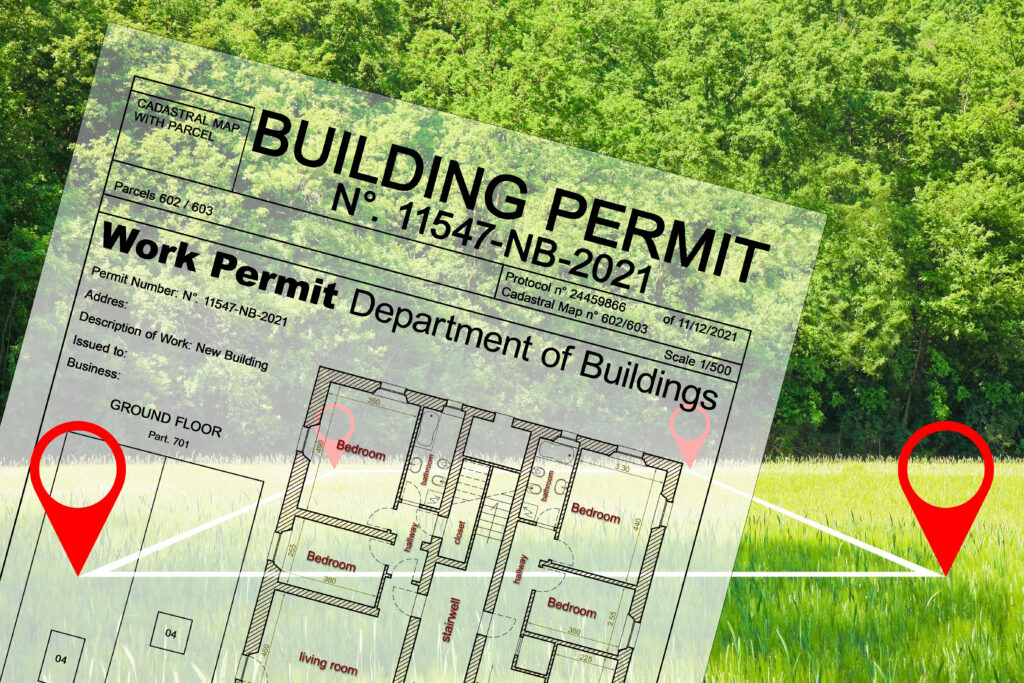
Commercial Construction Permits Required in NJ
What is a Commercial Construction Permit in NJ?
A commercial construction permit is an official document that authorizes the construction, renovation, and modification of a commercial property. A local government and municipality issue a commercial building permit. Commercial construction permits ensure that projects comply with zoning laws, safety regulations, and building codes. NJ business owners must acquire a commercial construction permit before starting any construction work.
When do NJ Business Owners need a Commercial Construction Permit?
NJ business owners need a commercial construction permit for any building, structural, HVAC, or electrical projects.
Listed below are 20 situations in which you need to obtain a construction building permit in NJ.
- Construction of a new building or a new structure
- Structural changes to a building or a structure.
- Any addition to a building
- Alteration in the interior or floor plan
- Work That Affects Accessibility Compliance (ADA)
- Any work affecting the building’s safety or occupancy Code Compliance
- Addition and changes in retaining walls and fences.
- Changes to building facades or exterior
- Installation of elevators or escalators
- Work that affects Accessibility Compliance (ADA)
- Installation of fire Suppression or alarm Systems
- Site Work (grading, excavation, parking lot construction)
- Installation of signage (external signs larger than a certain size)
- Changes in building use or occupancy
- Changes in parking layout
- Electrical system installations or upgrades
- Plumbing system on installations or modifications
- Renovations and additions to existing Buildings
- HVAC (Heating, Ventilation, and Air Conditioning) systems
- Demolition of any part of a commercial building
-
What are New Jersey Commercial construction permitting requirements?
New Jersey Commercial construction permitting requirements include a complete permit application form, detailed construction specification, zoning approval, contractor license, business or insurance certificates, site plans, technical submission, and certificate of occupancy.
The 6 main requirements of a commercial construction permit in NJ are listed below.
Complete Permit Application Forms
The New Jersey Uniform Construction Code (UCC) requires NJ business owners to complete and submit the application form. UCC-F100 is a Construction permit application. NJ owners will submit complete forms to the local Construction Code Enforcement Office. Business owners need to submit a subcode application for mechanical work, fire protection, plumbing, and building, alongside all supported documents and plans during application submission.
Detailed Construction Plans & Specifications
A dA detailed construction plan and specification are required to obtain a commercial building construction permit in New Jersey. Architectural and engineering plans demonstrate the nature and character of the work, along with dimensions and compliance with applicable codes. A professional design architect or engineer must sign and seal this plan before a NJ business owner submits it to the local municipal office. Municipal construction officials review the plan to verify that the proposed commercial project complies with building code and safety requirements.
Zoning Approval or Zoning Permit
Zoning approval is required before a structural permit is issued. Most municipalities in New Jersey require a zoning permit to ensure that the project follows the local land-use rules (setbacks, height) while parking and signage meet local ordinances. Many business owners seek zoning clearance before submitting a construction permit application, if required by the local authority.
Contractor Licensing / Registration Documentation
Local NJ municipalities require that a licensed contractor do a project. Proof of contractor license and registration is added to the commercial construction permit application.
Site Plans, Plot Plans & Additional Documents
Inspectors and officials require site plans, plots, and additional documents, such as grading plans or environmental approvals. These documents help officials evaluate site-specific compliance. A survey of the site plan must show property lines, challenges, existing structures, and utilities. Soil erosion controls, environmental approvals, and grading plans are required for large-scale commercial building projects in regulated NJ zones.
Other Permits Before Issuance
NJ state law allows municipalities to apply for other permits, such as Environmental compliance permits, Health Department preapprovals(food service, water), historical preservation review, and planning board approval. Local municipalities may require these permits before issuing a commercial construction permit.
What steps are involved in the commercial construction permit process?
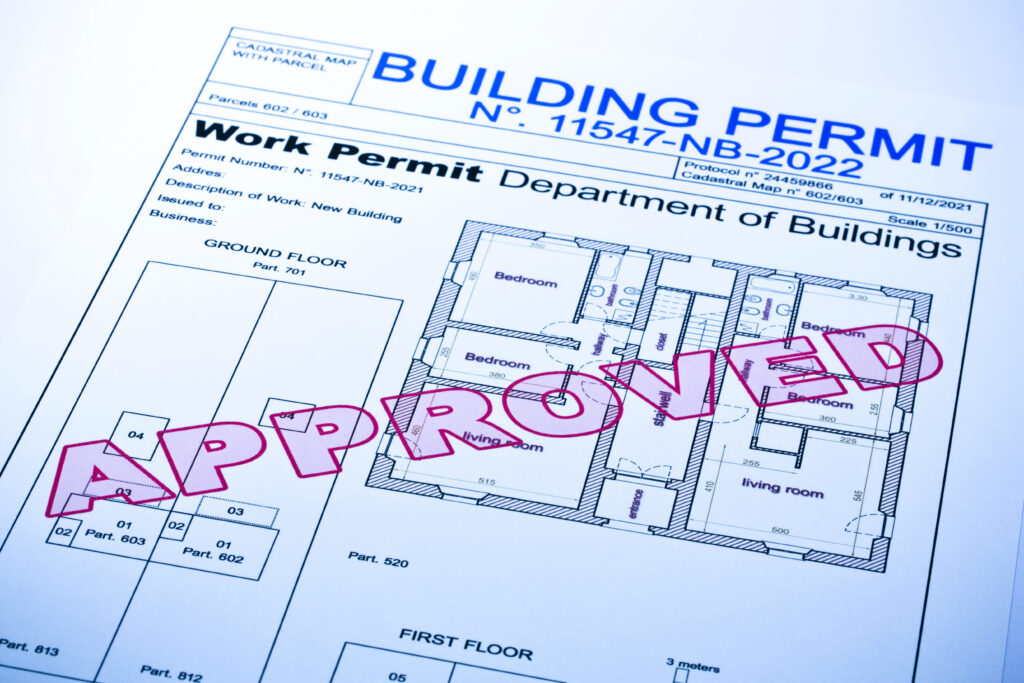
Building Permits Needed? We Can Take Care of It For You!
The 8 Steps involved in the commercial construction permitting process are listed below.
1. Initial Project Assessment and Code Determination
Initial project assessment and code determination requires NJ business owners to speak to the appropriate Building Department Code Official. Discuss the codes and ordinances that apply to a project.
Commercial construction work includes multiple subcode permits, such as Mechanical, plumbing, building, fire protection systems, and electrical systems. Each subcode is categorized under UCC, and your application package must include a subcode section. Talk to the code official, know the code, and mention the required code in the Commercial construction permit application.
2. Zoning Review and Prior Approvals
NJ business owners seek zoning clearance because municipalities require this clearance before accepting a construction permit application. Zoning clearance verifies compliance with local land use regulations. Get zoning clearance from the zoning board regarding property use type, lot coverage, height limits, setbacks, and parking requirements.
3. Application Submission
Submit the commercial construction permit application to the local building and construction department. Make sure that your application has UCC-F100, site plans/surveys, project plans/specifications, contractor/owner information, estimated cost, and fees. Always submit a complete building permit application to avoid delays. Project owners will pay plan review/intake fees. Some municipalities accept online applications, while others require in-person application drop-off; follow what is required by your local authority.
4. Application Review
Subcode officials review the plans for compliance with state and local codes. The building department requires additional information or revision if anything is unclear or incomplete. NJ municipal authorities take 10 to 20 business days to review or approve/highlight issues regarding your construction permit application.
5. Address Review Comments
A review comment letter is issued by building code officials if the application requires some corrections and has missing documents. The application must respond with updated plans and explanations. The permit application must be resubmitted and go under official review. Each subsequent review takes a short turnaround, like less than 7 days for approval or any comments. This cycle keeps repeating itself until officials are fully satisfied.
6. Permit Issuance
Local NJ municipality issues the commercial construction permit after the plan is successfully reviewed by officials and all fees are paid by the applicant. Permit issuance means NJ business owners obtain official authorization to begin work. This permit demonstrates what types of inspections are required at various stages of construction. NJ business owners must hang permits prominently on the job site so inspectors can see them easily.
7. Inspections During Construction
Each construction phase requires inspection from an appropriate code official. The inspector visits the site and performs an inspection to ensure that work follows the approved plan submitted during the application phase. The inspector checks whether the work complies with the UCC. Inspectors must respond to an inspection request within a specific timeline. Builders may use approved third-party inspection in case municipality inspectors are unable to meet the specific project timeline. The inspector must pass each inspection before work moves to the next phase.
8. Final Inspection and Certificate of Occupancy
A final inspection is scheduled by the property owner and building after construction is complete. The inspector passes final inspection, and the Building Department issues a Certificate of Occupancy (CO). This CO allows the property owner to legacy use the space. NJ business owners are not legally allowed to use or open the commercial construction without obtaining a CO.
FAQs
What happens if you do commercial construction without a permit in NJ?
Property owners face fines per day, penalties, and stop-work orders from the municipality if they do commercial construction without a permit in NJ. Municipality is authorized to ask the property owner to remove or alter the construction to stay in compliance with building codes, leading to costly repairs. The property owner is liable for back fees and additional permit costs if the project is discovered during an inspection. Failure to get a commercial construction permit leads to court appearances or restrictions on the use of the property until the owner achieves compliance.
What is the cost of permits for commercial building construction?
Commercial building construction permits are priced two ways: by project volume, measured per cubic foot, or by construction value. New buildings and additions follow one of these two methods. Subcode fees cover four separate inspections: building, plumbing, fire, and electrical. Every permit also carries a mandatory state surcharge, calculated per cubic foot on all new construction.
What permits are required for commercial construction from the health department?
Food establishment permits (restaurant, cafe), septic system permit, air quality permit (industry, factory), and wastewater permits (manufacturing plant, processing plant) are required for commercial construction by the health department.
How Long Does Construction Permit Approval Take In New Jersey?
Construction permit approval in New Jersey takes up to 20 working days. A large commercial construction permit that requires environmental or zoning approval requires 4 to 12 weeks. Subode review time is less than 7 days by the local municipality.


